
Why Small Classes Boost a Child’s Grades and Confidence in the UAE
Small class sizes describe a teaching setup where one teacher works with a limited number of pupils, usually somewhere between 12 and 20 in primary years. In the UAE, where families choose between British, American, IB and Indian curricula, class size has quietly become one of the most discussed factors when parents pick a school. The reason is simple: fewer children in a room means more eye contact, more feedback, and more chances for a shy pupil to be noticed.
This guide explains what happens inside those smaller rooms, why teachers behave differently, and how the setup shapes both grades and self-belief. It is written for parents comparing schools in Dubai, Sharjah, Abu Dhabi and Ajman who want to understand the trade-offs before signing an offer letter.
Attention
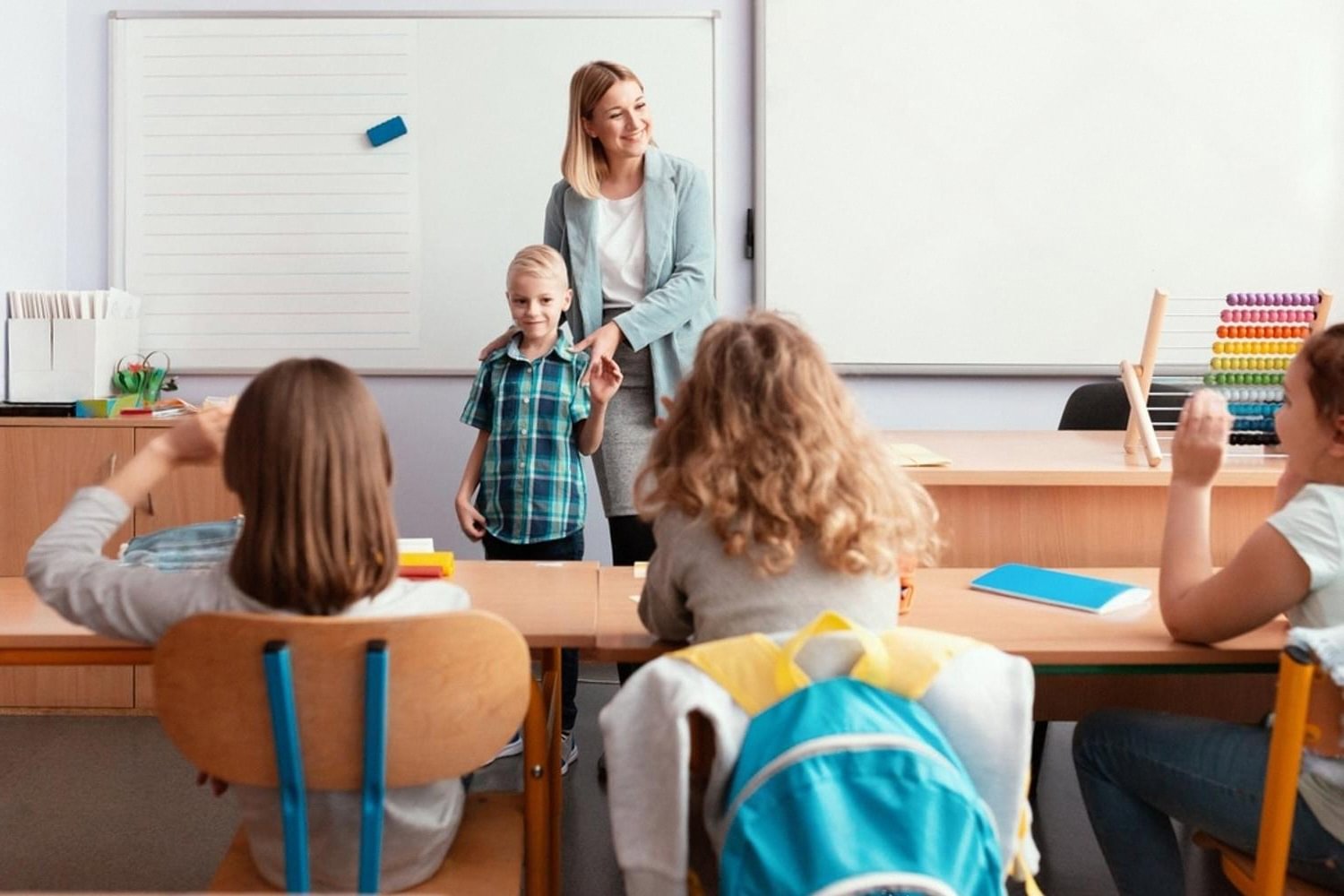
More one-to-one time with the teacher
In a class of 30, a teacher who checks in with every child spends less than two minutes per pupil in a 45-minute lesson. Cut that group to 15 and the same teacher can double the time, or use it to reteach a tricky idea. Research from the long-running Tennessee STAR project, one of the most cited studies on class size, found meaningful gains for children placed in classes of 13 to 17 pupils, particularly in the early years (Project STAR summary).
- Faster feedback on writing, maths workings and reading fluency.
- Earlier spotting of gaps before they turn into long-term weaknesses.
- Personal targets that a teacher can actually remember and follow up on.
- Fewer missed hands when children want to ask a question.
Support
Help with academic and creative tasks
When a child gets stuck on long division or a science project, the difference between a small and a large class shows up immediately. In a smaller group, the teacher can sit next to the pupil, watch how they work through the problem, and correct the exact step where the thinking breaks down. The same applies to creative work: art, music, and drama need feedback that is specific to that child, not a general note read out to the whole room.
- Targeted scaffolding. The teacher matches support to the skill the child is actually missing.
- Confidence to try. Pupils are more willing to attempt a hard question if they know help is nearby.
- Room for talents. A quiet child with a strong drawing hand or a knack for numbers gets seen sooner.
Many american curriculum schools in ajman and neighbouring emirates now advertise their pupil-to-teacher ratios openly, because parents ask about it during tours.
Engagement
Mini-games and team activities become possible
With 15 children in a room, a teacher can split the class into two teams for a spelling quiz, a maths relay, or a vocabulary game without the session collapsing into noise. Those short bursts of play are more than fun. They give children practice in taking turns, defending an answer, and cheering for a friend who got it right.
- Team-based vocabulary and mental-maths races
- Small-group science experiments where every pupil gets to handle the equipment
- Reading circles where each child reads out loud in the same lesson
- Debate pairs that would be impossible to manage in a class of 30
Active lessons also help children remember more. The UK’s Education Endowment Foundation notes that structured collaborative learning is one of the better-evidenced classroom approaches for progress (EEF Toolkit).
Belonging
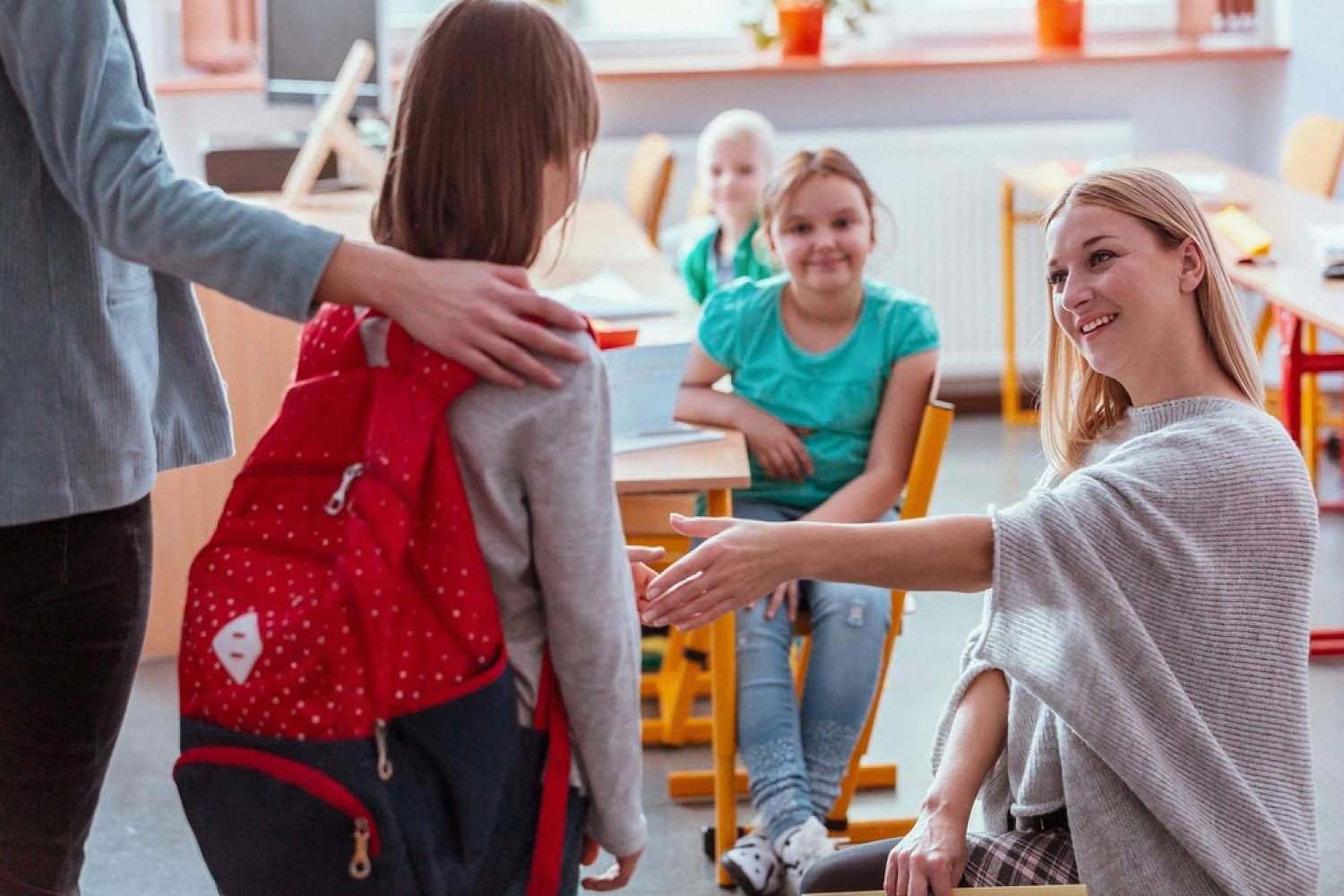
Friendships form, and children learn to help each other
A tight circle of classmates is easier to know. In a smaller group, children learn each other’s names in the first week, notice when a friend is upset, and start to share pencils, snacks and explanations without being asked. UAE classrooms often bring together pupils from a dozen nationalities, so this closeness matters even more: it turns a mixed group into a working team.
Confidence grows out of that. A child who feels safe among peers will put a hand up, volunteer for a role in the assembly, or ask the teacher to explain something again. Those small acts, repeated for a year, are what parents later describe as “my child came out of their shell”.
Peer-to-peer learning also becomes normal. A pupil who understands fractions helps the one who does not, and both of them get better at it. Teaching a concept out loud is one of the fastest ways to lock it in.
The chain of benefits, step by step
- Fewer pupils per teacher free up minutes that would otherwise go to crowd control.
- Those minutes turn into personal feedback and quicker correction of mistakes.
- Personal feedback raises the quality of daily work, not just exam scores.
- Regular success at small tasks builds a child’s sense of “I can do this”.
- Confidence at school spills into home life: more reading, more questions, more curiosity.
- Stronger friendships keep motivation steady when a topic gets hard.
Class size at a glance
| Class size | Typical teacher time per child (45-min lesson) | What it usually looks like |
|---|---|---|
| 10 to 15 pupils | 3 minutes or more | Frequent one-to-one check-ins, easy group work, every child heard daily. |
| 16 to 20 pupils | Around 2 to 3 minutes | Balanced: still personal, allows mixed-ability grouping and mini-games. |
| 21 to 25 pupils | Under 2 minutes | Teacher-led whole-class lessons dominate; feedback often written, not spoken. |
| 26 pupils or more | About 1 minute | Quiet pupils can go unheard for days; more time spent on classroom management. |
Numbers are indicative and based on standard lesson pacing. Actual figures vary by subject, age group and school policy.
Frequently asked questions
What counts as a small class in the UAE?
Most UAE schools describe a class of 15 to 20 pupils as small, particularly in primary years. Some private schools cap early-years groups at 12 to 15 and add a teaching assistant, which further improves the ratio.
Does class size really affect exam results?
Evidence from large studies such as Project STAR suggests yes, especially for younger children and for pupils who start school behind their peers. The gains are strongest in the first years of primary and in reading and maths.
Once children reach secondary age, teacher quality, curriculum and study habits weigh more heavily than the raw number of pupils in the room.
Are small classes worth the higher fees?
It depends on the child. A confident, self-driven learner may do well in a larger class with a strong teacher. A quieter child, or one who needs extra help with English or maths, usually benefits more from a smaller group where the teacher can notice them daily.
How do I find out the class size at a UAE school before enrolling?
Ask directly during the school tour. Good schools will tell you the current pupil-to-teacher ratio for the exact year group your child is entering, not just the school average. You can also check inspection reports published by the KHDA in Dubai or ADEK in Abu Dhabi.
Do small classes help children who are shy or new to English?
Yes. Shy children speak up more often when the audience is smaller and they know everyone in the room. Pupils learning English as an additional language get more speaking practice and quicker correction, which speeds up fluency.
Can a small class have drawbacks?
A very small group can feel intense, with fewer peers to compare ideas with and less variety in group work. If a personality clash develops, it is harder to move away from it. Most schools address this by mixing classes for certain subjects or activities.
How does class size affect friendships and behaviour?
Smaller groups tend to build tighter friendships and clearer social rules, because children see the same faces every day and learn to sort out disagreements. Teachers also spot bullying or exclusion faster when there are fewer pupils to observe.